January 12, 2013
DIY Urbanism, also known as Tactical Urbanism, is a pretty broad umbrella and can be done anywhere. I thought it was impressive that the concept even has its own Facebook page. Despite occurring in many places all over the world, the meaning is always the same - a short term action that leads to a long term change. The goal is to have a small-scale focus (building by building, block by block) rather than concentrating on large developments and master plans. Our government entities at all levels have little to no money for revitalization projects, while billions of dollars are spent on highways and wide roads only to lead to money and populations leaving the city. The change that is sought must be conducted by local residents and community groups.
This concept begins with old strategies of simply taking care of where we live and the neighborhoods we inhabit. By residents taking an active role in cleaning up their blocks, soon the community has a new spirit and the streets are enlivened with even more activity. People are taking back their cities in simple, yet creative ways. It's about grassroots plans and experimenting to see what works. Many examples of DIY Urbanism were discussed in Rik's presentation:
 |
| Photo from gray_matter(s) within Georgia Tech’s College of Architecture |
"Parking Day" is occurring in many cities and gaining popularity. People take over metered parking spaces intended for cars and use however they please.
 |
| Photo from Urban Repair Squad |
Citizens are setting up their own free book exchange locations. Just another element to liven up the environment and create interaction within a city.
 |
| Photo from Tactical Urbanism |

"Chair Bombing" in Brooklyn, NY
 |
| Photo from Spontaneous Interventions |
 |
| Photo from Tactical Urbanism |
Depaving concrete areas has been made popular by the Portland group, Depave, who even provides instructional videos on their website. More natural community spaces are then created, such as gardens or landscaping. The asphalt is recycled as well.
 "Pavement to Plaza" includes completely removing automobile access with temporary materials, only to transition to permanence later. Pedestrians are reclaiming space. This photo (right) is in lower Manhattan around 1997. The successful project was later constructed with permanent materials and became the inspiration for NYC's now widely-praised pavement to plaza program. One very well-know example was the Broadway pedestrian plaza experiment in Times Square.
Below is a successful demonstration of how something seemingly small but creative can really stimulate change. From The Fun Theory: "...the easiest way to change people's behaviour for the better is by making it fun to do."
***
Debby Stein then spoke about her work with the Riverside Arts District in Fort Worth. Located northeast of downtown, this community is an urban village and has been designated for redevelopment by the City. Despite the creation of a master plan, nothing was really happening to further the vision. Debby has worked passionately with residents to bring attention and life to the area. From their website: "Riverside Arts District is the vision of artists, residents, community leaders, and business owners who want to build a walkable, dynamic and creative community in Fort Worth. RAD's first event was Better Block embRACE the STREET - a temporary yet dramatic makeover of Race Street including new streetscaping, public art, an urban garden, dog park, merchants, pop up shops and galleries. The event demonstrated the great potential of this neighborhood and the city's need for an authentic arts district. Upcoming events include Gallery Nights, Outdoor Concerts, Artist Open Studio nights, Garden events and more!" Debby has taken a lead role in understanding the area's potential and communicating and coordinating with local businesses, residents, developers, and city officials.
 Art is the catalyst for this area on its path to revitalization. Through coordination of various demonstration projects, such as gallery walks and community drum circles, the Riverside Arts District is really creating an identity all its own and restoring the area one block at a time.
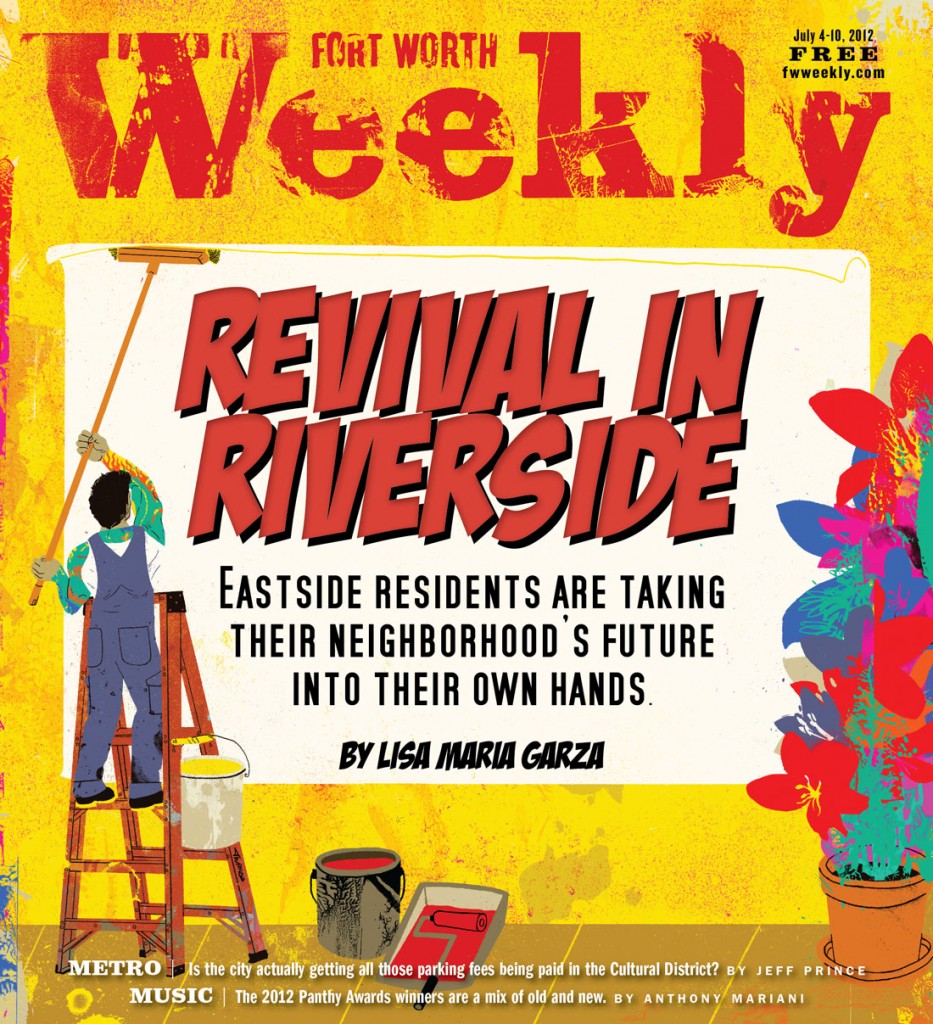 Here is a great article about the community effort: Revival in Riverside.
No comments:
Post a Comment