December 22, 2012
 |
| Photo by Hidell |
 |
| Photo by Hidell - PV solar panels on the roof |
The property also features the use of a geothermal system to heat and cool the building, which greatly improves the building's efficiency and reduces life-cycle costs. The library has 150 geothermal wells that go 250 feet into the ground. The video below is a very informative depiction of how a geothermal system works for commercial buildings as well as the many benefits.
The office space in the library is interesting as well, since it contains open desk areas. These open desk areas with low partition walls allows for better collaboration and communication between workers as well as less lighting since rows of LED ballasts were used. In addition, the use of carpet tiles allows for the replacement in the future of any individual damaged tiles without replacing the entire flooring.
Because the City of Bedford is very fiscally conservative and budget cuts have forced almost every department to cut staff over the years, Maria and her library staff have had to get creative in their operations in order to work as efficiently as possible.
 |
| Photo by Hidell |
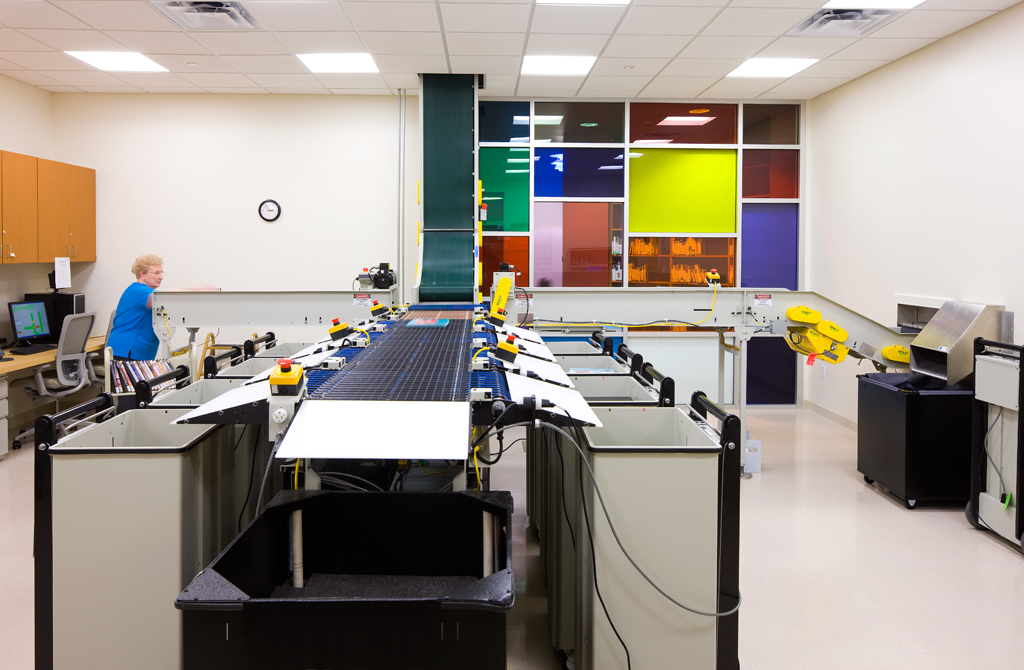
Maria convinced the city to buy an Automatic Materials Handling Unit (she was able to use the argument of energy and operational cost savings to convince the city to buy this). The machine checks in returned books, sorts them, and checks for any issues, which drastically limits this time-intensive activity and frees up the already-lean staff for other tasks. The machine is also hooked up by a conveyor system to the outside drop box. Maria had conducted a cost-benefit analysis, time studies, and had valued the ROI - all came back with a six to seven year payback and staff savings.
 |
| Photo by Hidell |
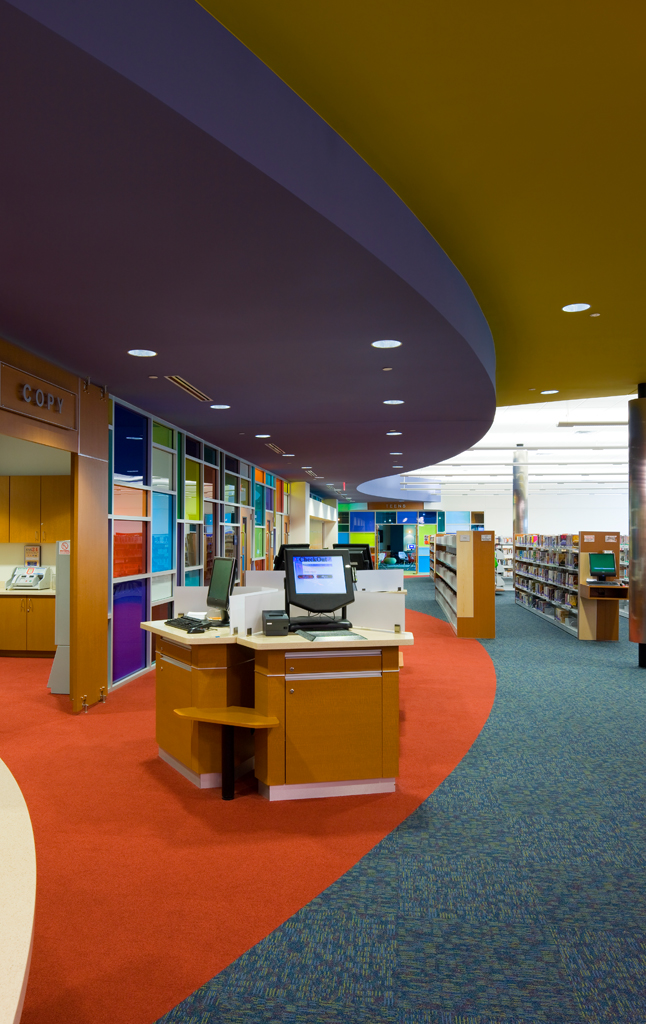
The library also features automatic self-checkout stations (right), which frees up the staff to be available for customer questions and concerns. Maria noted that her staff is always striving to be the best by introducing more efficient ways of operating. And as proof of how far they have come, the library was a finalist for Library of the Year. Here sustainability does not only existing in the design of the building, but also in the productivity of the staff.

No comments:
Post a Comment